Give Me Back My Child, I Need My SASSA Grant: Dark Side of Child Support
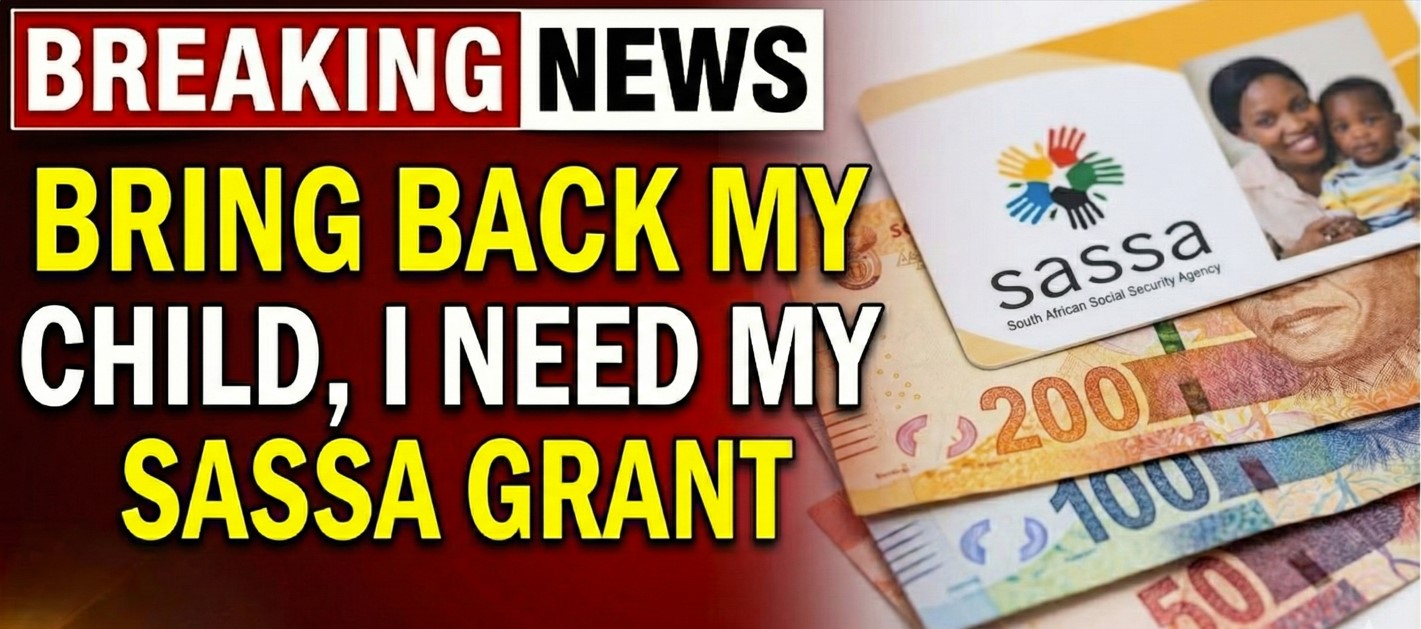
A heartbreaking story has emerged from Johannesburg. Negligent parents are demanding their children back not because they love them, but because they want SASSA grants. This shocking reality puts vulnerable children at risk and leaves caregivers facing threats and violence.
The issue is simple but devastating: some parents abandon their children, then later demand them back to access the R530 monthly child support grant. Social workers trying to protect these children face intimidation, harassment, and even death threats.
This story shows how grant money meant to help children is sometimes misused by those who should be caring for them most.
The Case That Shocked Johannesburg
A Johannesburg woman has been caring for a young boy since February 2024. She doesn’t want her name published because the child’s biological parents have threatened her with violence.
Here’s what happened:
The boy was first found alone at a tavern in Orange Grove. He was only two years old. His parents had left him there unsupervised.
In May 2024, the same child was abandoned at a crèche in the same area. Nobody came to fetch him.
By June 2024, the situation got worse. The boy was admitted to Edenvale Hospital suffering from malnutrition. Again, his parents abandoned him there.
After the tavern incident, the mother signed an affidavit. This legal document gave the caregiver permission to look after the child temporarily. After the hospital incident, another affidavit was signed making the arrangement more permanent.
The boy thrived in his new home. He received proper food, care, and love. But then everything changed in September 2024.
Child Welfare Returns Boy to Negligent Parents
Despite clear evidence of neglect, Johannesburg Child Welfare returned the boy to his biological parents in September 2024. This decision shocked the caregiver and community members who knew the family’s history.
The caregiver was told she could no longer see the child. Within weeks, community members reported seeing the boy left alone at a tavern again for several hours.
The boy, who will turn four this year, is back in the same dangerous situation he was rescued from. Meanwhile, the woman who cared for him fights to get him back, facing threats every step of the way.
The Real Reason: SASSA Grant Money
Why did the parents suddenly want their child back? The answer is simple and sad: money.
Shortly after the child was removed, the father approached the caregiver with a request. He wanted her to sign a letter stating the child lived with him. This would allow him to claim the SASSA child support grant.
She refused.
In October 2024, the father discovered his SASSA card had been blocked. The mother’s earlier affidavits prevented him from getting the documents he needed to claim the grant.
He went to the caregiver demanding the child back. When she explained that Child Welfare and the mother had given her permission to care for the boy, he became aggressive.
According to an affidavit seen by The Citizen newspaper, “He spent the entire afternoon calling both the social worker and me, repeatedly stating that he wanted his child back.”
The situation escalated dangerously. In December 2024, while doing charity work in Orange Grove, the caregiver encountered the father again. He rallied a mob to intimidate her and threatened to kill both her and the child.
This incident was reported to police.
Death Threats Against Caregivers
The Johannesburg case isn’t isolated. This is happening across Gauteng.
The Gauteng Department of Social Development confirmed that social workers regularly face abuse when trying to protect children from negligent parents.
Spokesperson Motsamai Motlhaolwa revealed shocking statistics: “Four social workers in Soweto have been seriously threatened by clients in different cases recently.”
These dedicated professionals work under difficult circumstances. They try to protect vulnerable children while facing harassment and threats from desperate parents.
Despite the danger, social workers remain committed to their duty. Motlhaolwa said: “We salute the social workers who have been threatened and intimidated, yet remain steadfast in their duty.”
Why Parents Become Aggressive
Shaheda Omar, Clinical Director at the Teddy Bear Clinic, explained this pattern to The Citizen. She said parents become “aggressive and manipulative” when SASSA grants are threatened.
“It is not unusual; it is standard practice,” Omar explained. “Often, they hold on as it is their security blanket and it is their means of survival, so they are going to fight tooth and nail for that.”
For some parents, the monthly R530 child support grant represents their only income. When they lose access to this money, they become desperate. Unfortunately, this desperation puts children at risk.
The grant is meant to help feed, clothe, and educate children. But in cases of neglect, it becomes something else: a source of income for parents who don’t actually care for their children.
How SASSA Grant System Works
SASSA explained that child support grants must go to the primary caregiver where the child actually lives. Parents not living with their children cannot legally receive the grant.
When someone is approved for a grant, SASSA explains that they must report any changes in circumstances immediately. If a child moves to live with someone else, the grant should transfer to that person.
SASSA reviews grants periodically. They check information from:
- Department of Home Affairs
- Banks
- South African Revenue Service
- Credit bureaus
However, these reviews only look at financial circumstances. They don’t investigate whether the child is actually being properly cared for.
If beneficiaries don’t present themselves for review, the grant lapses after 90 days. If their income exceeds the threshold, the grant also stops.
SASSA spokesperson Andile Tshona confirmed: “The review of social grants is to check if the beneficiaries’ financial circumstances have changed and if they are still eligible to receive the grant.”
What SASSA doesn’t check during these reviews is whether parents are actually providing proper care for their children.
The Gap in the System
Here’s the problem: SASSA checks financial eligibility but not whether children are safe and cared for. That responsibility falls to Child Welfare and the Department of Social Development.
But these organizations are overwhelmed. Social workers handle huge caseloads. They face threats and intimidation. Sometimes, despite clear evidence of neglect, children are returned to dangerous situations.
The system has created an easy loophole: parents can neglect their children, allow someone else to care for them, then demand them back when they need grant money.
This puts children in impossible positions. They’re moved between homes like pawns in a financial game.
What Needs to Change
Several changes could help protect children:
Better coordination: SASSA and Child Welfare need to work together more closely. Financial reviews should include welfare checks.
Protection for social workers: Those trying to protect children need better security and legal support when facing threats.
Stricter enforcement: Parents who abandon children should face consequences, not be allowed to reclaim them for financial reasons.
Faster processing: When caregivers legally take responsibility for children, grant transfers should happen quickly to remove financial incentive for parents to interfere.
Follow-up visits: Regular checks should ensure children returned to parents are actually being cared for properly.
The Child’s Wellbeing Should Come First
The current situation puts grant money ahead of children’s safety. This is wrong.
Friends of the Johannesburg caregiver contacted The Citizen to explain that the boy was thriving in her care. They begged authorities to remove him from his allegedly negligent parents.
But their pleas have gone unheard. The child remains with parents who have repeatedly abandoned him, while the woman who cared for him faces threats for trying to help.
Final Thoughts
The child support grant exists to help children, not enrich negligent parents. When the system allows parents to use children as meal tickets, something is fundamentally broken.
Social workers risk their lives trying to protect vulnerable children. They deserve support, not threats.
Caregivers who step up when parents fail deserve recognition and protection, not intimidation.
Most importantly, children deserve to grow up in safe, loving homes where they’re valued for who they are, not for the grant money they represent.
The Johannesburg boy’s story should be a wake-up call. How many other children are trapped in similar situations? How many caring people are afraid to help because of threats?
Until the system changes to put children’s wellbeing first, these heartbreaking cases will continue. The question is: how many more children will suffer before we act?
If you witness child neglect or abuse:
- Contact Child Welfare: 0861 4 CHILD (0861 424 453)
- Report to police: 10111
- Department of Social Development: 012 312 7727
Children deserve better. It’s time to ensure they get it.